Thomas Brent

CERN teams up with Ukrainian lab to develop scintillation for future innovative electromagnetic calorimeters
Submitted by tbrent on
18 June 2026
x

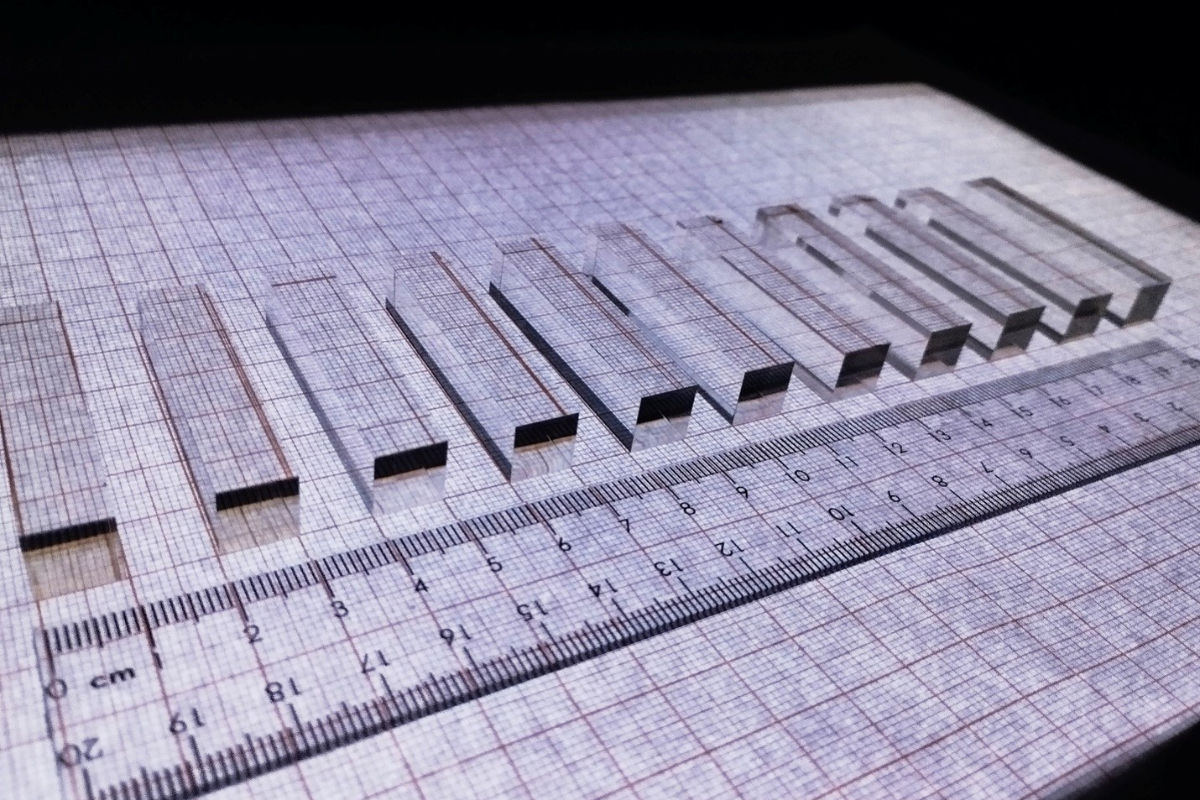
Scintillation elements fabricated from BSO crystals fabricated in ISMA for tests in CERN. Credit: Oleg Sidletskiy / ISMA

A Ukrainian laboratory has come through challenging conditions caused by Russia’s full-scale invasion to successfully complete a three-year EU-funded project to develop scintillators for innovative electromagnetic calorimeters for use in high energy physics and other industrial applications. 

From January 2023 to December 2025, the Institute for Scintillation Materials (ISMA) in Kharkiv led the project, TWISMA, alongside partners CERN and the Institute of Light and Matter (ILM) at the University of Lyon.  

The project was funded under the Twinning instrument of the EU’s R&D framework programme, Horizon Europe. As well as funding a scientific component, Twinning projects connect leading scientific laboratories to ones located in countries that are lagging in R&D performance to support networking, knowledge sharing, and training. It marked the continuation of CERN’s collaboration with ISMA, with the institutions previously working together on an EU Horizon 2020 Rise project INTELUM, as well as a more than 30-year participation in the Crystal Clear collaboration. 

“The project wouldn’t have been possible without the huge help from our partners,” said Oleg Sidletskiy, head of the crystal growth technology department at ISMA and coordinator of TWISMA.

In fact, it nearly didn’t happen at all. 

The project team was notified of the grant success in May 2022, shortly after Russia’s full-scale invasion of the country. There was a lot of doubt whether it would be possible to accept, with Kharkiv under heavy shelling. 

“Fortunately, we had a few months to think, and it became clear that we could try and adapt the project to move certain elements online. It was not an easy decision to accept this project, but in the end it was the right one,” Sidletskiy said. 

Still, challenges remained. A big problem was power cuts caused by Russian attacks. The role of ISMA in the project was to grow specially adapted crystals, which take weeks to produce. “We could spend a week or two growing a crystal and then have a few seconds’ electrical cut and we’d need to start again, Sidletskiy said. “It wasn’t easy.”

But the team were able to work through the issues and have now produced prototypes that are currently being tested at CERN, with one type being explored for use in an upgrade to CERN’s LHCb experiment. 
x
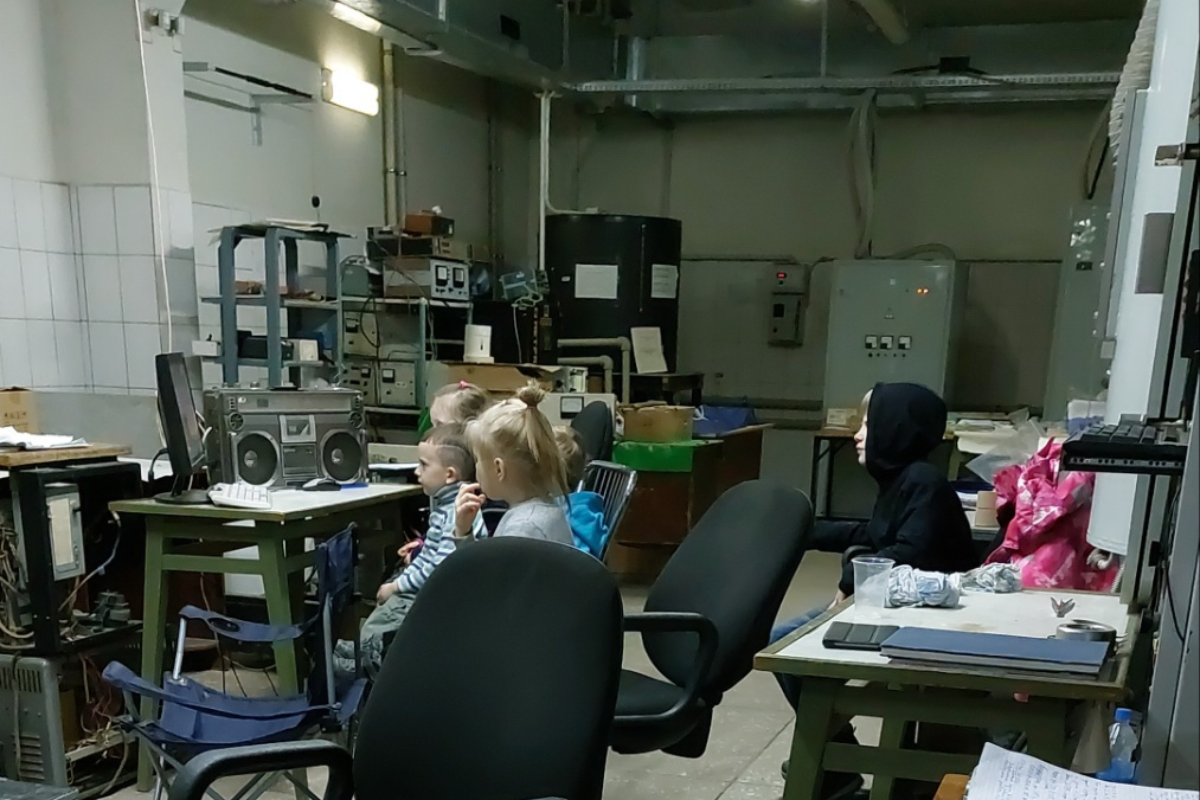
During the first months of Russia’s full-scale invasion, the Crystal Growth Laboratory at ISMA not only continued its scientific work but also functioned as an underground shelter for ISMA staff and their families. Credit: Oleg Sidletskiy / ISMA

Novel scintillation materials

A calorimeter based on scintillation is a detector that measures the energy of particles by capturing the flashes of light they produce. When a high-energy particle passes through a scintillating crystal inside the detector, it causes the crystal to emit a brief burst of light in a process called scintillation. By measuring that light, scientists can determine how much energy the particle carried.

The TWISMA project investigated two types of scintillators for novel electromagnetic calorimeters. 

The first uses crystals from the garnet family grown in the shape of thin fibres. Ce-doped garnets are already used in some detection applications, but the TWISMA team enhanced them by adding small amounts of additional elements to the crystal structure to speed up the light pulse in such crystals.

The goal was to have materials that would emit very bright light, very fast. This is important because in CERN's Large Hadron Collider, bunches of particles collide every 25ns, so a detector must be able to capture one collision and reset before the next one arrives. The project team managed to improve the scintillation decay time of these Ce-doped garnets from around 60ns to 18ns, still a little short of their desired target of under 10-15ns, but a significant improvement all the same.

The second scintillating crystal looked at by the project was made of bismuth silicate oxides (BSO) which can produce two distinct types of light signal simultaneously: scintillation light, and Cherenkov emission. 

The main technical challenge was producing BSO in large, highly transparent crystal form, particularly in the ultraviolet range of light. Growing crystals at this size is something only a handful of institutions worldwide can do. The team has so far produced prototypes of 5cm in length and hopes to scale up to the target of 20–25cm if further funding is secured. 

These crystals are being tested and characterised at CERN and could potentially be used in detectors at future collider experiments. Aside from high-energy physics, these scintillation materials may be used in other fields, such as medical imaging for positron emission tomography, PET scans, or security scanning devices, for example. 

The results of the CERN tests are expected later this year. 

With the TWISMA coming to a close at the end of last year, the team is now working on applying for new funding under the European Innovation Council’s Pathfinder grant, which funds teams to increase the technological readiness of their research. 

“I hope we can scale up our production and switch to the more industrial phase of development,” Sidletskiy said. 

The TWISMA project was led by Oleg Sidletskiy and his team from ISMA, Etiennette Auffray and her team from CERN’s Experimental Physics Department, and Kheirreddine Lebbou and his team from the University of Lyon.

This article was first published on Accelerating News on 12 June, 2026.

Strap
The EU-funded project nearly did not go ahead as it kicked off shortly after Russia’s full-scale invasion of Ukraine. Despite the challenges, it has delivered positive results
Promote menu
On

CERN leads project to make EU scientific data more accessible with AI

Submitted by tbrent on
29 May 2026
x

The EU Open Research Repository (EOR repository), hosted on the CERN-made Zenodo platform, acts as a home for EU project data, and is increasingly popular. Credit: FotoRichter / Pixabay

The EU has funded over 130,000 research projects through its R&D framework programmes over the past 40 years, which has generated enormous quantities of extremely valuable data. There is an increasing understanding that sharing this data in an open way is essential for science to continue to deliver groundbreaking results, but the challenge of doing so efficiently is understandably complex.

This is what makes the EU Open Research Repository (EOR repository), hosted on the CERN-made Zenodo platform, so vital. The repository acts as a simple way for researchers to share their data in a findable, accessible, interoperable, and reusable (FAIR) manner. Since 2021, making research data as FAIR as possible has become a requirement for all projects funded by the European Commission.

The EOR repository was created through the HORIZON-ZEN project, which ran from 2023 to 2025, to act as a specific space on Zenodo for data, results and materials from EU-funded projects This makes it easier for researchers to both disseminate their data in an organised way, and also to find project results in an efficient way. Now, over 2,700 EU-funded projects have joined the repository, uploading over 150,000 records.

But the repository is a victim of its own success, requiring more human capital to describe and prepare data for upload as it grows, and to keep records findable. To help manage this, the two-year HORIZON-ZEN+ project was launched in October 2025, building on its predecessor with the aim of drawing on artificial intelligence to improve data curation tools, to automate certain workflows, and to improve interfaces for depositing and finding information.

“Researchers carry a wide range of responsibilities, from running studies to writing papers, sharing results, and securing funding. Few have the time or expertise to do all of them well, and their work often suffers as a result, shared poorly or in ways that fall short of FAIR principles,” said Alex Ioannidis, CERN’s Zenodo service manager.

“The role of Zenodo, with its EOR repository, is to provide the easiest way for researchers to preserve their data FAIRly, without burden,” he added.

The new project will introduce several new elements. First, the data curation process puts a high demand on Zenodo’s administrators. Research results directly submitted to EOR, and not to a specific project, require careful curation by the Zenodo team. The new project will build more automated processes to support the team.

Secondly, the project will use AI to improve the discoverability features on the repository. Ensuring that scientific data is uploaded correctly so that it can be rediscovered can be time-consuming, and without a proper framework, researchers can often mis-label work. HORIZON-ZEN+ will use AI to make this process easier for researchers, and also to make the repository’s search functionality smarter.

The EOR repository, and the wider Zenodo platform, are part of the way in which CERN is supporting the EU’s ongoing efforts to improve open science tools.

From autumn this year, the Open Research Europe (ORE) open access publishing platform will be hosted at CERN. ORE is both free for readers to access peer-reviewed papers published there, and free for researchers to submit papers.

ORE and the EOR repository are complementary. Researchers can use the repository to share all their project results, datasets, posters, etc., and then submit final papers to ORE to be peer-reviewed. These two initiatives also support the EU’s European Open Science Cloud (EOSC), which is the broader framework that makes scientific data FAIR across Europe. Essentially, EOSC ensures that more specific repositories, such as the EOR repository, are well linked.

Strap
The EU-funded HORIZON-ZEN+ project will develop tools to improve the increasingly popular EU Open Research Repository
Promote menu
On

EPITA project to spur innovative new accelerator technologies launches at CERN

Submitted by tbrent on
15 May 2026
EPITA project

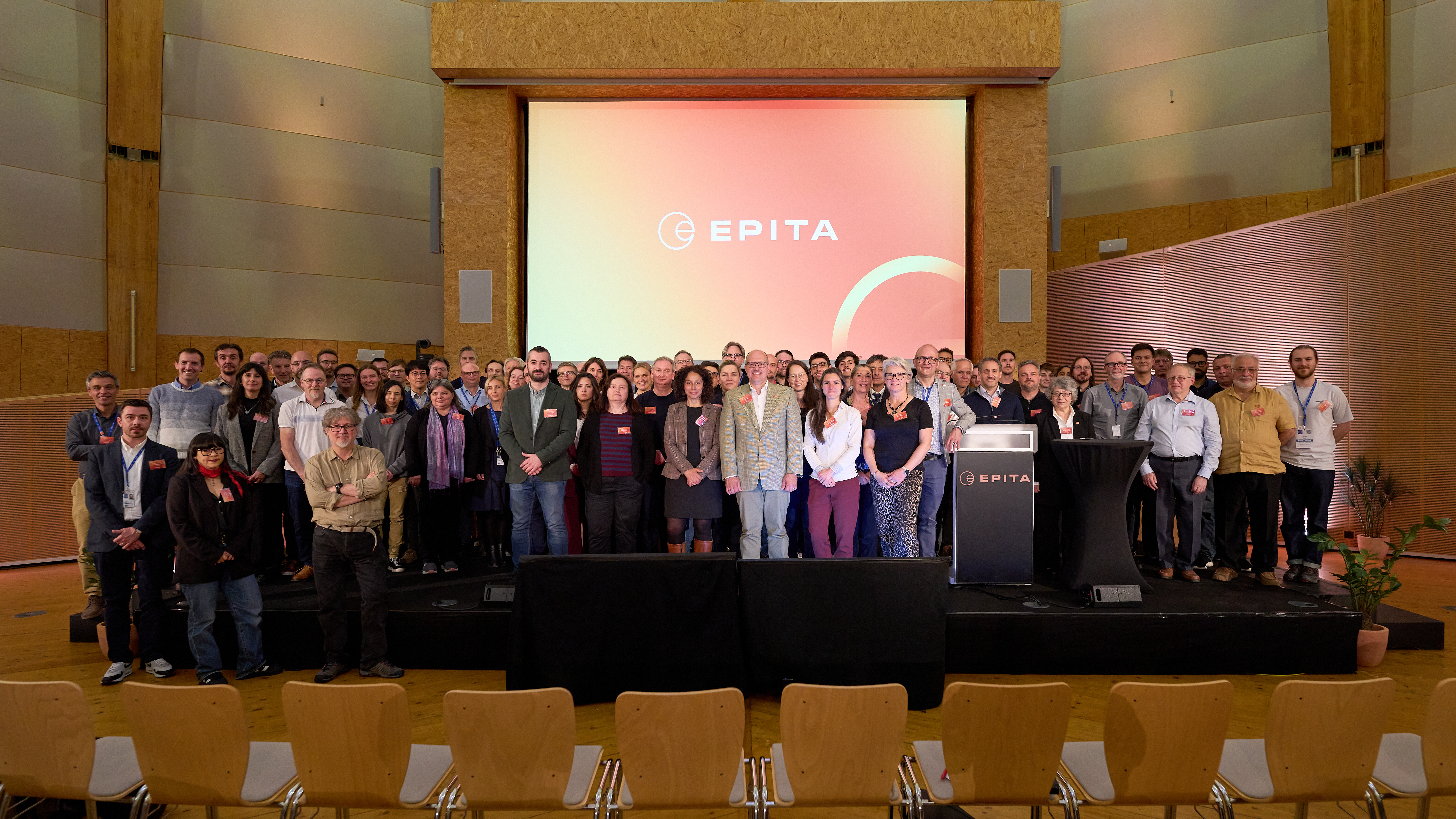
The EU-funded EPITA project officially launched this week with a two-day kick-off event hosted at CERN, the coordinating institution. 

Funded through Horizon Europe’s Research Infrastructures programme, the project will develop innovative technologies to improve the performance and sustainability of particle accelerators and facilities in close cooperation with industry partners. 

The launch event, which took place on May 12 and 13, brought together representatives of the 42 project beneficiaries to set out their goals and plans for the next four years. 

Toms Torims, EPITA’s project coordinator, said the purpose of EPITA is “to maintain Europe’s technological leadership and competitiveness in accelerator science.”

“Through co-creation with industry we are not just building hardware, we are securing European technological sovereignty and delivering societal value through a resilient, inclusive and world-leading innovation ecosystem,” he said, introducing the event. 

EPITA builds and expands on the work carried out by the I.FAST project , which ended last year, and will further mature accelerator technologies to get them closer to being market ready.

The project will take several groundbreaking accelerator technologies that have been researched over the past two decades and create 22 new working prototypes to test their use. Some of these new technologies “could change the way we operate completely at accelerator labs around Europe”, according to Torims. 

The project is broken down into three thematic areas: accelerating systems, magnets and beamlines, and frontier technologies. Within these areas are nine work packages driving the technological aspects of the project. 

There are also several cross-cutting complementary activities built into the project. 

One focus is on sustainability. A dedicated task in work package two will develop standardised ways to assess the sustainability of large-scale research infrastructures by refining two commonly used tools, life cycle assessments and a design for sustainability, specifically for accelerator technologies. 

Elsewhere, the EPITA project will host a series of challenged-based innovation (CBI) events. These CBIs invite senior bachelor and master students for a week-long programme that results in them pitching innovative new uses for accelerators in a specifically chosen topic area. During I.FAST, four CBIs were organised, two on the topic of the environment and two on healthcare. 

The goal of the CBIs is to open up the world of particle accelerators to a young generation of talented students. 

EPITA also has strong connections to industry. There are 16 deep-tech partners involved in the project, with the managing director of the company Kyma, Raffaella Geometrante, acting as leader of work package seven on permanent magnets. 

The project also includes a specific task to collaborate with medical doctors to get their input on designing accelerator technologies for medical purposes.

EPITA is guided by two significant European roadmaps. The first is the European Strategy for Particle Physics (ESPP), which is one of the main references for EPITA. A fourth update of the ESPP is to be approved this month, and inputs to this have fed into EPITA’s planning. 

The second guide for EPITA is the League of European Accelerator-based Photon Sources (LEAPS)’s 2025 Technology Roadmap , which sets out the development of European research infrastructures in photon science for the coming years. 

The EPITA project received €10M in funding from the EU, and has €11M in matching funds from the project’s partners. 

At the kick-off meeting, the governing structure of EPITA was also finalised. Peter McIntosh from the UK’s Science and Technology Facilities Council (STFC) will serve as governing board chairperson. The three-person Scientific & Technological Advisory Committee will be Steinar Stapnes of Oslo University, Lia Merminga of Fermilab, and Tadeusz Lesiak of the Polish Academy of Sciences’ Institute of Nuclear Physics (IFJ PAN). 

Promote menu
On